
Shtandart is a unique historical replica. In the world today, it is one of the very few operational wooden square-rigged sailing ships. Stories of exact replicas of historic vessels that are not museum exhibits but actively sail the seas have become a rarity.
Recreated in Saint Petersburg using historical shipbuilding techniques “from the keel up,” the Shtandart replicates the design of the first frigate of Peter the Great’s fleet from 1703.
What makes Shtandart exceptional is not only its historical accuracy, but the fact that it continues to live a full maritime life—sailing, welcoming enthusiasts and adventurers of all ages on board. Preserving the maritime heritage and sailing knowledge of our ancestors is the result the Shtandart crew achieves every day by raising its historical sails.
Built Against the Odds
At the heart of Shtandart is not money, but the energy of people passionate about maritime history, determination, persistence, and belief in a shared dream.
The construction of the ship itself was a true challenge.
It required rediscovering and rebuilding, almost from scratch, the lost knowledge and practices of 18th-century wooden shipbuilding: felling massive oak and larch trees, sawing them, manually installing heavy frames (the ship’s ribs), and creating a watertight wooden hull from planks. These are skills no modern academy teaches today.
During construction, Shtandart faced a wall of skepticism from maritime professionals, including classification societies and regulatory authorities. Proving that a traditionally built wooden sailing ship could safely operate at sea—despite not fully conforming to modern regulatory frameworks—was a long and difficult process that took many years.
There were also periods of economic pressure and struggles for the right to freely sail the seas. There were always individuals and institutions uncomfortable with the principles of freedom, independence, and conscious responsibility for one’s own life—principles that form the foundation of the Shtandart philosophy.
The ship continues to exist because the crew believes in this philosophy and proves it through action.
The vessel was built almost without a budget, through the efforts of a volunteer team. Sponsorship—mainly from the Netherlands, England, and Russia—came later, when the project was already nearing completion.
The life of the ship has always been defined by continuous overcoming of challenges and teamwork among people united by their passion for the sea and maritime history.
A Ship That Teaches Through Practice
Unlike most historical replicas, Shtandart is constantly in motion. It takes part in long sea passages, festivals, public events, and film productions.
A small permanent crew and a group of volunteer trainees:
- operate the ship
- repair and maintain its seaworthiness
- develop their own practical skills and teach newcomers
This creates a continuous accumulation of knowledge:
- seamanship, maritime traditions, and sailing skills
- work with historical masts and rigging
- repair of the wooden hull and its components
In essence, Shtandart is a living laboratory of maritime history, where the past is not observed from a distance but literally held in one’s hands—through hoisting sails and navigating the ship across the sea.
But the most important aspect is something that cannot be measured in miles or knots.
Voyages aboard the Shtandart become a true school of life. It is a space where people learn not only seamanship, but also how to work with one another—how to listen, support each other, and function as a team in a confined environment where everything depends on collective effort.
On board, language, age, and nationality quickly lose their importance—because what matters is simple: everyone must do their job, and the ship must keep moving forward. In such moments, a powerful understanding emerges that trust and coordination are not abstract ideas, but the very foundation of life at sea—just as essential and natural as air and wind.
Community
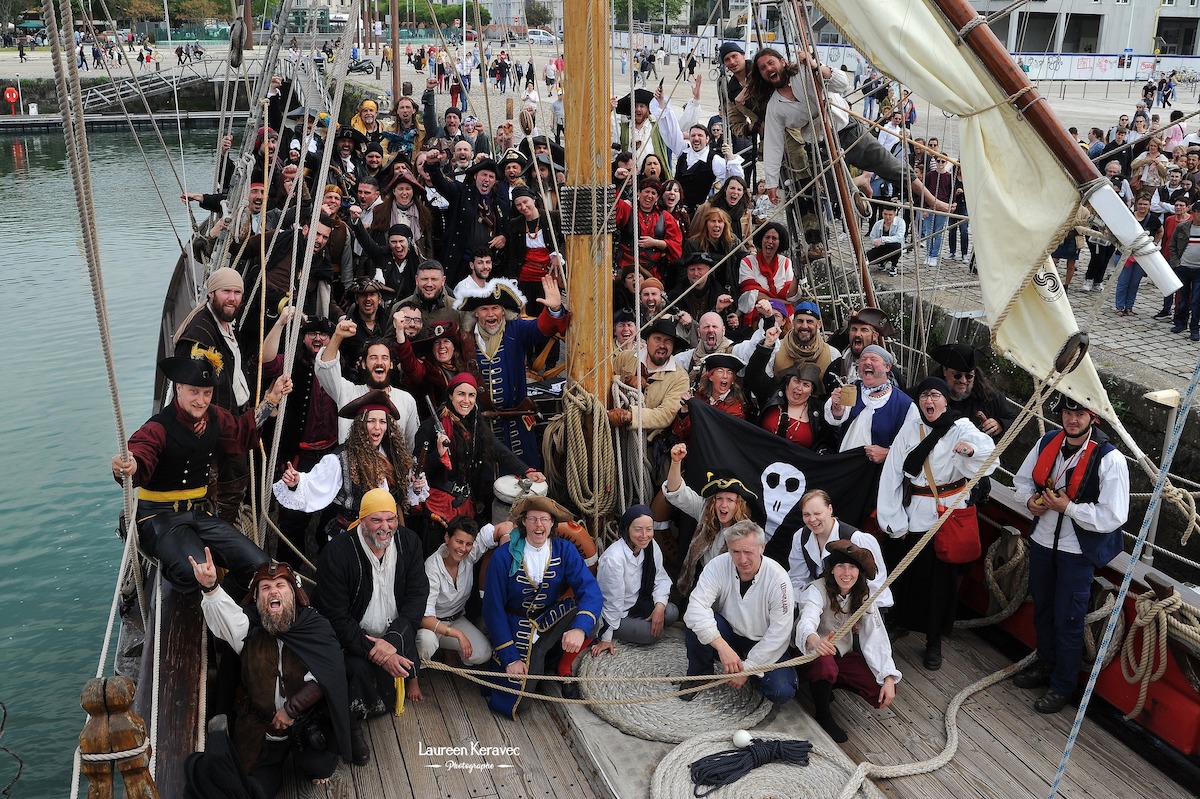
At the core of Shtandart is an international volunteer crew.
Anyone can come aboard:
- experienced sailors
- beginners
- people seeking adventure
- those considering a maritime career
Life on board is full immersion:
- sail handling and rigging work
- ship operation
- navigation
- night watches
Every participant becomes part of the crew—not a passenger.
Experienced officers pass on extensive maritime knowledge, adapting training to each individual. Many participants later become professional sailors and captains, calling the Shtandart the place where their journey into the maritime world began.
A Traveling Ship, a Living Tradition
For the past 16 years, the Shtandart has led a nomadic life, sailing across seas—from the Mediterranean to the Baltic.
In most ports, visitors who are interested are welcome to come aboard and literally touch the maritime traditions of the 18th century—and the living story of the Shtandart itself.
And this story is unique: it does not belong to the past, even though it was born from it. The Shtandart exists in the present—in every voyage, every raised sail, and every watch at sea.
On its deck, knowledge is not explained—it is experienced. Wind, night, work, fatigue, and joy all become the classroom. The Shtandart is neither a monument nor a symbol. It is a ship that continues its journey as long as there are those ready to keep course with it.
 English
  Français
  Русский
  Deutsch
  Español