
10/12/2025
Alexander Francis Shaw
Un seul courriel d’un activiste a mis en lumière le chaos dans les ports britanniques, soulignant la manière dont le lobbying étranger peut influencer la politique frontalière et la sécurité nationale du Royaume-Uni.
L’affaire du Shtandart met en évidence un défi beaucoup plus profond pour le Royaume-Uni : il ne s’agit pas seulement de réformer sa politique frontalière, mais de déterminer qui en détient réellement le contrôle. Le fiasco révèle la vulnérabilité des autorités face aux pressions externes et leur difficulté à prendre des décisions cohérentes lorsque des intérêts étrangers interviennent.
Dans un épisode embarrassant pour la plaisance britannique, le Royaume-Uni a été trompé au point de considérer un navire amical comme une menace hostile. La réaction déployée a été si maladroite qu’elle aurait favorisé une frégate en bois du XVIIIᵉ siècle. Cette situation illustre non seulement les lacunes dans la coordination et la communication des autorités portuaires, mais aussi la complexité de protéger les frontières dans un contexte où des pressions politiques et économiques extérieures peuvent influencer les décisions stratégiques. Le fiasco du Shtandart souligne la nécessité pour le Royaume-Uni de clarifier la chaîne de commandement et de renforcer la capacité de ses institutions à distinguer rapidement entre menaces réelles et fausses alertes, tout en préservant la crédibilité et la sécurité de ses ports.
A Single Hoax Email
Before Shtandart even entered UK waters, French activist and adventurer Bernard Grua copied numerous Scottish west coast ports into an urgent email claiming that the ship, a replica of Peter the Great’s flagship, was a sanctioned asset of Putin’s regime and banned under UK law.
The email showed several signs of being a hoax, but as Shtandart approached the sleepy railhead port of Mallaig on the evening of July 13th, the two women in the harbour office weren’t taking any chances. They phoned Border Policing Command in Inverness for guidance. Inverness said the decision lay with the port, but covered themselves by telling the staff to contact the Maritime and Coastguard Agency.
The MCA then sent them in circles between departments, one of which replied a full day later with an automated out-of-office message.
A ruthless lobbyist, Bernard Grua, boasts on his website of ‘14 beautiful victories‘ in his campaign against Shtandart across the EU. Each is a showcase of his ability to sow confusion, pressure small ports into erring on the side of caution, and then claim their decisions as triumphs of his own making, hoping the precedent will harden into policy.
It didn’t work on Mallaig. Having more decisive courage than anyone above them in the chain of command the ladies quietly agreed that, innocent until proven guilty, they would grant Shtandart entry to the port to take on fresh water. They nevertheless breathed a sigh of relief when the ship sailed on past the harbour mouth, ghosted into Loch Nevis, and tied up alongside the ferry pier at Britain’s remotest mainland settlement, Inverie. This is where I met the captain and crew of what was about to become the most controversial ship in the North Atlantic.
Meet the Shtandart
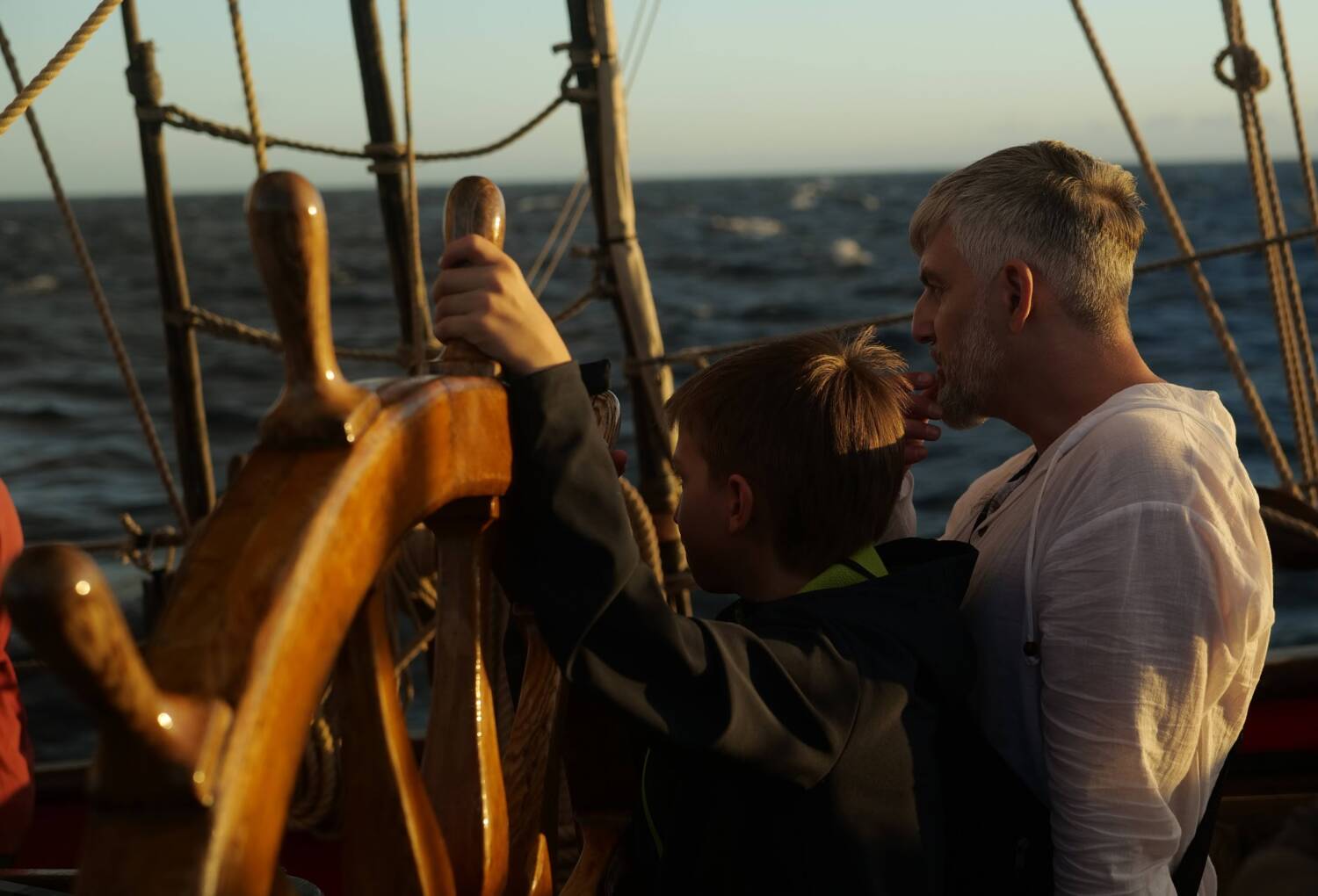
Shtandart operates as a training vessel with a rotating crew of all ages, nationalities and levels of experience. She takes part in historical re-enactments, festivals and races – and is one of the friendliest, most open ships we have ever welcomed here.
Built in Saint Petersburg in the early 1990s, Shtandart originally flew a Russian flag, as did many vessels in UK and EU waters. Banning her simply for a Russian connection makes about as much sense as outlawing Tchaikovsky or seizing Fabergé eggs from Western museums. Yet for Grua, whose website exults in the “wondrous Slavic world” and its indigenous women, this vendetta seems to serve a more personal interest.
Yielding to the doubts sown by his lobbying, the Port of Aberdeen on July 15th banned Shtandart from entry, effectively excluding her from the Tall Ships Race due to begin three days later. The ban was then circulated to other ports by the Border Policing Command, making it likely they would follow suit — even though any legal basis for the decision remains confined to press speculation echoing the arguments on Grua’s website. The chain of accountability loops back on itself to enforce a law that, on inspection, appears not to exist.
Finally, on July 18th, the UK Department of Transport replied to Grua’s email, stating that
“where there is evidence of a breach under transport sanctions regulation, the Department of Transport will not hesitate to take appropriate enforcement action.”
In other words, in the absence of any such evidence, it remained entirely up to local ports and harbour authorities to decide whether Shtandart could enter. True to form, Grua tried to claim a victory by presenting the response as official backing and now flaunts the letter on his website, seemingly unaware that it amounts to a polite rebuff.
A Dangerous Precedent
This must not set a precedent. With their carefully worded reply, the UK authorities avoided falling into the ultra virestrap Grua had laid – yet six weeks on, no official body has said whether his allegations about Shtandart are true, let alone whether they would form a lawful basis for excluding her from British ports.
If I am being unfair to Bernard Grua, I trust the authorities will grant his claims whatever post hoc legitimacy they deserve. But anyone genuinely concerned about malign foreign interference will recognise that this is a dangerous moment for the UK to show how easily its port policy can be bent by foreign activism of undisclosed patronage.
Read the full article on visegrad24.com
 Français
  English
  Русский
  Deutsch
  Español